Automated Storage Systems
- Home
- Automated Storage Systems
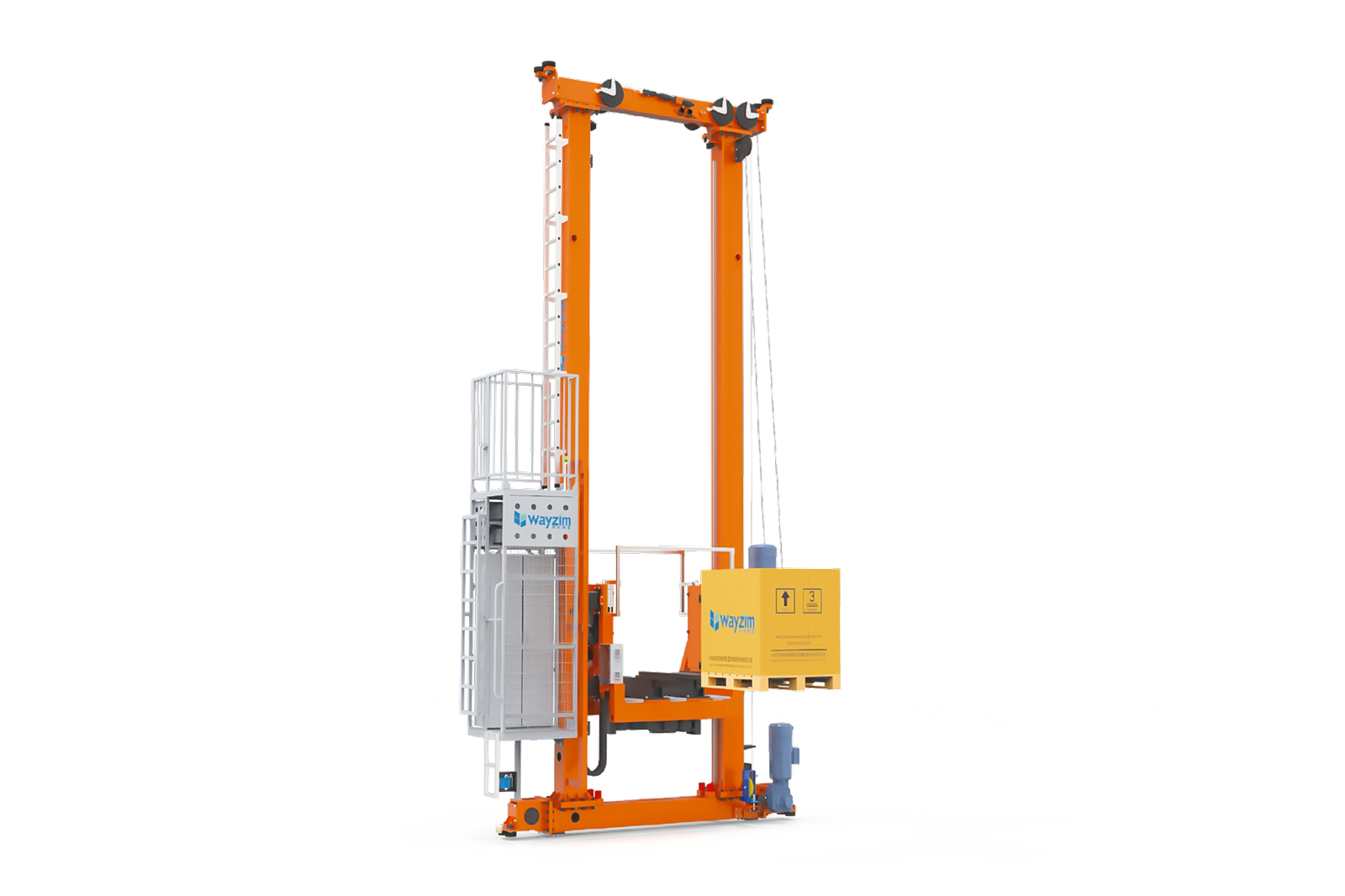
ASRS Pallet Stacker Crane
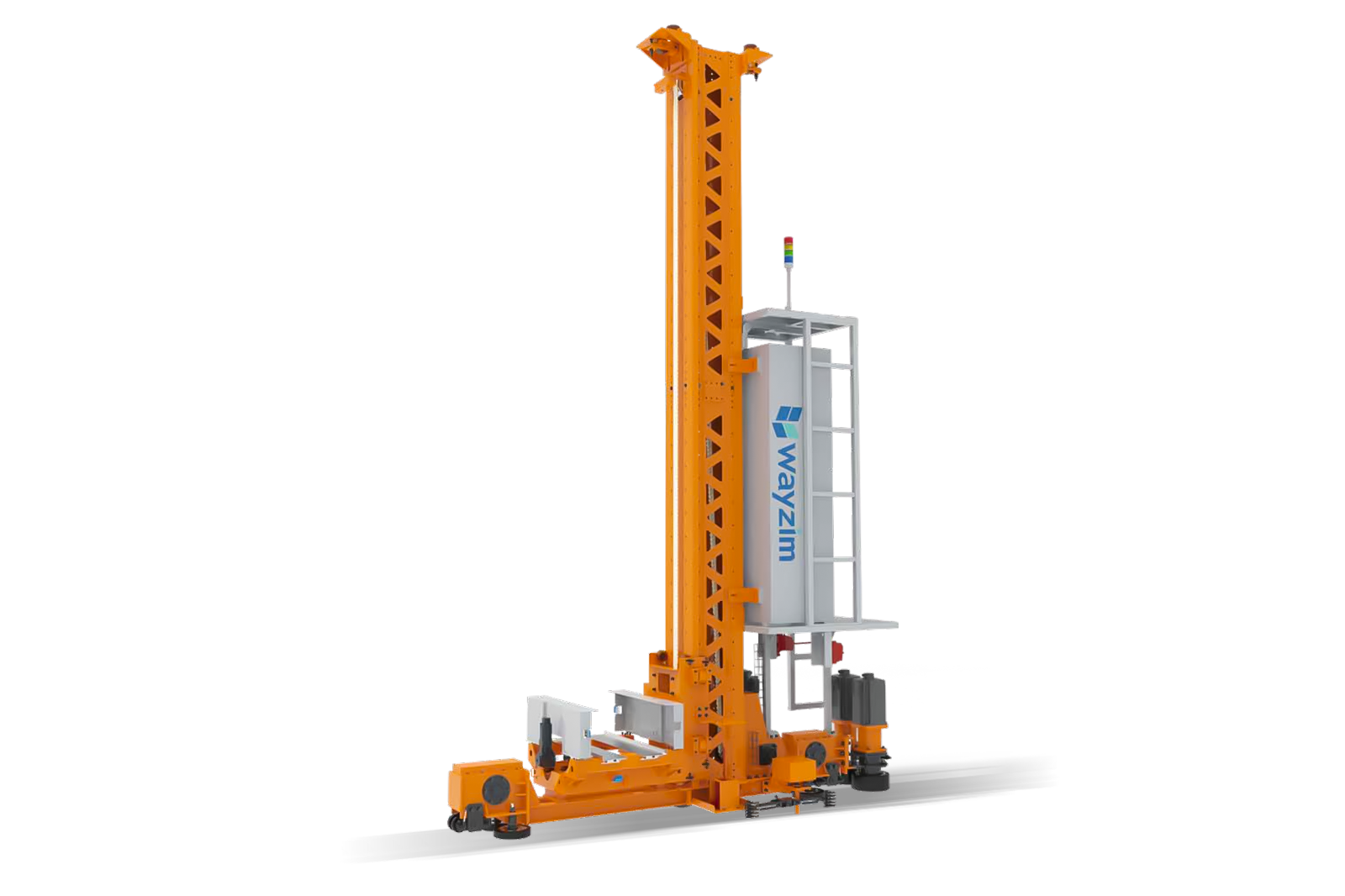
Tote Stacker Crane
What Is an Automated Storage System?
An automated storage system is a technology-driven warehousing solution that uses motorised carriers, lift modules or shuttle mechanisms to store inventory in high-density configurations and deliver it to a fixed picking station on demand. Often referred to as ASRS (automated storage and retrieval systems), these platforms eliminate unnecessary forklift travel, reduce manual handling risk and unlock vertical space that conventional racking leaves unused.
Automated storage technologies are categorised by the type of load they handle, the building envelope they operate within and the throughput they need to sustain. The right system depends on a combination of SKU profiles, order patterns, available ceiling height and integration requirements with existing warehouse management software.
Our Automated Storage System Range
We offer a cross-technology portfolio designed to meet different intralogistics needs — from the automated storage of small items to long and bulky materials, from light loads to heavy-duty applications. Each system is modular, scalable and engineered for both indoor and outdoor installations across Australia and the broader APAC region.
SILO² — Multi-Column Vertical Lift Module
The SILO² is a multi-column vertical lift module (VLM) built for high-density storage of small and medium-sized items, including components with very high specific weight. By leveraging vertical space, SILO² concentrates large volumes of goods within just a few square metres, delivering floor-space savings of up to 90 per cent compared with traditional racking.
Key specifications:
- Configurable from 2 to 7 storage columns
- 120 tray configurations with load-bearing capacity up to 400 kg per tray
- Specific tray load-bearing capacity up to 1,000 kg/m²
- Side-by-side, multi-level or opposite picking and refilling stations
- Suitable for indoor and outdoor installations
The SILO² is ideal for manufacturers, maintenance operations and distribution centres that need rapid access to thousands of small parts while minimising warehouse footprint.
RIGO — Horizontal Lift Module for Low-Ceiling Facilities
RIGO is a horizontal lift module designed for lightweight, small-sized items in premises where ceiling height is limited. Operating on a goods-to-person principle, RIGO fits facilities with ceiling heights starting from just 2.2 metres, making it an advanced alternative to traditional shelving, racking and horizontal carousels.
Key specifications:
- Configurable from 2.2 m to 4.5 m in height
- Modular structure from 2 to 20 storage columns
- 1 to 6 picking and refilling stations per system (side-by-side or opposite)
- Trays with load-bearing capacity up to 105 kg
- Tray widths of 800 mm or 1,000 mm with 600 mm depth
RIGO suits retail back-of-house, small-footprint 3PL operations and office environments where floor area is at a premium but ceiling heights rule out vertical solutions.
MAXI L — Automated Vertical Storage for Long Materials
MAXI L is the automated vertical storage system purpose-built for long materials and versatile loads such as bars, profiles, semi-finished products, moulds and accessories. It stores materials in an orderly, protected environment while reducing floor-space occupation and improving accessibility, traceability and inventory control.
Key specifications:
- Long drawers up to 7,100 mm
- Load-bearing capacities of 1,000 kg or 3,000 kg per drawer
- Height-expandable structure with 500 mm incremental modules
- Configurable access on all four sides, including multiple levels
- Fixed load/unload stations or motorised shuttles with automatic load ejectors
- Indoor and outdoor installations
MAXI L is the go-to system for steel service centres, fabrication workshops and industrial distributors managing extensive catalogues of long-format inventory.
MAXI T — Tower Storage for Flat and Bulky Materials
MAXI T is an automated tower storage system engineered for flat and bulky materials — panels, sheet metal, plates and pallets. It eliminates floor stacking, improves protection against damage and significantly reduces the warehouse footprint needed for heavy, oversized items.
Key specifications:
- Single or double-tower configuration based on handled volumes
- Drawers with load-bearing capacity up to 3,000 kg
- Usable drawer dimensions up to 4,100 mm wide and 2,100 mm deep
- Height-expandable structure with 500 mm incremental modules
- Dedicated support frame for safe handling via forklifts, overhead cranes or lifting devices
MAXI T is widely adopted by sheet-metal processors, panel manufacturers and heavy-industry warehouses that need safe, dense storage for oversized flat goods.
MAXI STC — Stacker Crane for High-Volume Long Materials
MAXI STC is a stacker-crane-based ASRS designed for high-density storage of long materials — profiles, bars and extrusions — when the number of SKUs exceeds 400. It is engineered to ensure production continuity, speed and safety in high-volume industrial environments.
Key specifications:
- High-volume storage for applications exceeding 400 SKUs
- Simultaneous handling of two load units within the same cycle
- Storage structures up to 15 m in height
- Fully protected handling area
MAXI STC suits large-scale steel distributors, aluminium extruders and automotive component suppliers requiring continuous, high-throughput access to extensive long-material inventories.
Compatta — Mobile Racking for Pallets and Long Loads
Compatta is a mobile racking system that delivers efficient, reliable high-density storage with a controlled level of investment. It is suitable for storing pallets, bins and long loads on pallet racking or cantilever structures, in temperature-controlled environments and cold stores down to −30 °C.
Key specifications:
- Compatible with new or existing pallet racking and cantilever systems
- Expandable over time with additional mobile bases
- +80% storage capacity with the same floor area, or −40% occupied space with the same stored goods
- Operates in ambient conditions or cold rooms as low as −30 °C
- Simple control including remote radio operation without leaving the forklift
Compatta is the preferred choice for cold-chain logistics providers, food and beverage distributors and any operation where maximising pallet density within the existing building envelope is the primary objective.
Why Choose Automated Storage for Your Warehouse?
The business case for automated storage in Australian warehouses rests on four pillars. First, industrial real estate costs across Sydney, Melbourne and Brisbane corridors continue to rise — automated systems recover floor space that justifies their investment within years rather than decades. Second, chronic workforce shortages in logistics roles make automation a reliability strategy, not just an efficiency play. Third, automated storage virtually eliminates picking errors and product damage, protecting both margins and customer satisfaction. Fourth, modular ASRS platforms scale with your business, allowing you to add columns, towers or mobile bases as throughput demands grow — without relocating to a larger facility.
Industries where Automated Storage Systems can be used
Our automated storage systems support a wide range of Australian industries, including manufacturing and engineering, steel and metals distribution, automotive and aerospace, pharmaceutical and healthcare, food and beverage cold-chain, third-party logistics (3PL), retail and e-commerce fulfilment, and government and defence supply chains.
FAQs
Q1: What is an automated storage and retrieval system (ASRS)?
An automated storage and retrieval system — commonly abbreviated to ASRS or AS/RS — is a warehouse technology that uses computer-controlled mechanisms such as vertical lift modules, stacker cranes or shuttle carriers to automatically place items into storage locations and retrieve them on demand. ASRS platforms replace manual forklift-and-racking workflows with goods-to-person delivery, improving picking speed, accuracy and storage density while reducing labour requirements and workplace injury risk.
Q2: How much floor space can automated storage systems save?
The exact savings depend on the system type and the inventory profile, but vertical lift modules like SILO² can reduce floor-space consumption by up to 90 per cent compared with traditional selective racking. Mobile racking systems such as Compatta typically increase pallet storage capacity by around 80 per cent within the same floor area. These space savings are achieved by eliminating fixed aisles and by exploiting vertical height that conventional racking cannot reach.
Q3: What types of products can be stored in an automated storage system?
Automated storage systems handle an extremely wide range of goods. Vertical lift modules store small to medium-sized items including spare parts, electronics, tools and pharmaceutical products. Tower storage systems manage flat and bulky materials such as sheet metal, panels and plates. Long-material systems accommodate bars, profiles, extrusions and tubes up to 7,100 mm in length. Mobile racking handles standard pallets, bins and long loads, including temperature-sensitive goods in cold stores down to −30 °C.
Q4: Are automated storage systems suitable for cold-storage environments?
Yes. The Compatta mobile racking system is specifically engineered to operate in temperature-controlled environments and cold stores as low as −30 °C. This makes it ideal for food and beverage warehouses, pharmaceutical cold chains and frozen-goods distribution centres that need to maximise pallet density while maintaining strict temperature control. Remote radio operation allows forklift drivers to manage aisle access without leaving the cab, minimising exposure to extreme cold.
Q5: How does a vertical lift module (VLM) work?
A vertical lift module stores trays of inventory in two columns of shelves within a sealed, vertical enclosure. When an operator requests an item, a computerised extractor shuttle travels vertically between the columns, retrieves the correct tray and delivers it to an ergonomic picking window at floor level. Sensors automatically measure the height of goods on each tray so that trays are stored with minimal wasted vertical gap — maximising the number of storage positions within the available ceiling height. This goods-to-person approach eliminates walking, searching and ladder climbing.
Q6: What ceiling height do I need for an automated storage system?
Ceiling-height requirements vary by system type. The RIGO horizontal lift module operates in facilities with ceilings as low as 2.2 metres, making it the solution for mezzanines, retail back-of-house and office environments. Vertical lift modules such as SILO² scale to match available height — the taller the ceiling, the more storage positions the system accommodates. Stacker crane systems like MAXI STC can utilise structures up to 15 metres in height. During our site assessment, we measure usable clear height and recommend the configuration that extracts maximum storage density from your specific building envelope.
Q7: Can automated storage systems integrate with my warehouse management system (WMS)?
Yes. All of our automated storage systems communicate via standard industrial protocols and can be integrated with leading WMS and ERP platforms. Integration enables real-time inventory visibility, automated replenishment triggers, pick-list synchronisation and full lot or serial-number traceability. Our engineering team works with your IT department or systems integrator to ensure seamless data exchange between the ASRS and your existing software environment.
Q8: What is the typical return on investment (ROI) for warehouse automation?
ROI timelines depend on variables such as labour costs, storage-density gains, picking-error reduction and the scale of the installation. In the Australian market, most automated storage investments deliver payback within two to five years. The primary savings come from reduced labour (fewer pickers needed), recovered floor space (deferring or avoiding facility expansion), lower error and damage rates, and improved throughput that supports revenue growth without proportional headcount increases. We provide a detailed ROI analysis as part of every warehouse assessment.
Q9: How long does it take to install an automated storage system?
Installation timelines range from a few weeks for a standalone vertical lift module to several months for a large-scale stacker crane or integrated mobile racking project. Modular systems like SILO² and RIGO are designed for relatively fast deployment because they arrive as pre-assembled modules that are erected on-site and commissioned. The overall project timeline also depends on site preparation, electrical and data infrastructure readiness, and WMS integration scope. We provide a detailed project schedule during the proposal phase.
Q10: Do you offer service and maintenance for automated storage systems in Australia?
Yes. We provide ongoing preventive maintenance programs, remote diagnostics and on-site technical support for all automated storage systems we supply across Australia. Regular maintenance ensures system uptime, extends component life and preserves manufacturer warranty coverage. Our APAC-based service team can respond to critical issues quickly, minimising downtime and its impact on your warehouse operations.

A cross-technology portfolio designed to meet different intralogistics needs.
From the automated storage of small items to long and bulky materials, from light loads to heavy-duty applications, offering makes it possible to select the most suitable automated storage system according to available space, handled materials, and operational processes. A range engineered to adapt to diverse intralogistics needs, featuring intelligent, modular technologies designed to evolve over time.
Benefits of Automation
for forward-thinking companies
When robots and automation are implemented in a business effectively, they don’t replace jobs. They augment them to drive greater productivity.
- Greater speed
- Increased accuracy
- Increased Warehouse Safety
- Adaptable Workforce
- Innovative Brand Image
- Higher Customer Satisfaction