

Every parcel that moves through an Australian distribution centre needs three things captured at speed: its dimensions, its weight and its barcode. Get that data wrong — or get it slowly — and the cost compounds downstream. Mis-sorted parcels. Inaccurate freight charges. Bottlenecks that back up an entire conveyor line during peak season.
A DWS system (short for Dynamic Dimensioning, Weighing and Scanning) handles all three data-capture tasks in a single pass, while parcels are still moving. But not every DWS system is built for the same volume. A unit designed for 1,500 parcels per hour won’t hold up in a facility processing 8,000.
This guide explains how to match a DWS Dynamic Weighing & Scanning system to your actual throughput requirements — not an idealised spec sheet, but the real-world volumes your operation handles on its busiest day. We’ll walk through how to calculate what you need, what components matter most, and how SmartlogitecX’s DWS solutions fit into a broader sortation workflow for Australian logistics businesses.
What Is a DWS System and Why Does Throughput Capacity Matter?
How Dynamic Dimensioning, Weighing and Scanning Works
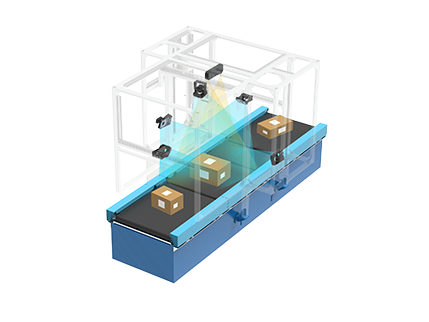
A DWS system captures parcel data inline — meaning it does so while items travel along a conveyor, rather than requiring an operator to place each parcel on a static bench. The system typically comprises three functional stages: a buffer section that spaces parcels for accurate measurement, a weighing section that records mass using load cells or dynamic scales, and a scanning section that reads barcodes and captures volume using cameras or light-curtain sensors.
The data from all three stages is aggregated by a host computer system in real time. That information feeds directly into your warehouse management system (WMS) or transportation management system (TMS), enabling accurate freight billing, sort-path decisions and inventory reconciliation — all without manual data entry.
Why Parcel Throughput Rate Defines System Selection
Throughput rate — measured in parcels processed per hour — is the single most important specification when choosing a warehouse dimensioning system. Every other decision flows from it. The speed of your scanners, the sensitivity of your load cells, the spacing logic of your conveyor buffer: all must be calibrated to the number of items your facility needs to process within a given window.
Undersize the system and you create a chokepoint that limits your entire sortation line. Oversize it and you’re paying for capacity that sits idle. Neither outcome is acceptable when margins in Australian parcel logistics are already tight.
Static vs Dynamic DWS: Which Approach Suits Your Operation
Static DWS setups require an operator to place each item on a measurement station, scan it manually and record the output. They suit low-volume environments — small 3PL operations, returns-processing benches, or facilities handling fewer than 500 parcels per hour. Dynamic DWS systems, by contrast, are designed for conveyor-integrated, high-speed environments. They handle the entire data-capture cycle automatically, with no human intervention per parcel. If your operation processes more than a few hundred items per hour, a dynamic system is the only practical option.
How to Calculate Your Warehouse Throughput Requirements
Measuring Current Parcel Volume and Peak Demand
Start with what you know. Pull twelve months of dispatch data and map your daily parcel volume across the year. Identify your average daily throughput, your busiest single day, and your sustained peak periods — typically one to two weeks around major retail events.
The number that matters most is not your average. It’s your peak. A DWS system must be specified to handle your highest sustained volume without degrading accuracy or creating backlogs. If your facility ships 4,000 parcels on an average day but 9,500 during Click Frenzy week, the system needs to handle 9,500 — distributed across your operating hours.
Forecasting Growth for Australian eCommerce Fulfilment
Australian eCommerce fulfilment volumes have grown substantially year on year, and the trend shows no sign of levelling off. When specifying a DWS system, it makes sense to factor in at least two to three years of projected volume growth. A system that handles your current peak today but has no headroom for growth will need replacing or augmenting sooner than planned.
Speak to your commercial team. Look at contract pipeline, new channel partnerships, and any seasonal category expansion. The goal is a throughput figure that represents your realistic ceiling for the next 36 months — not a theoretical maximum, but a defensible projection.
Setting Throughput Benchmarks for DWS Specification
Once you have your peak volume and your growth projection, convert that into a parcels-per-hour target. Divide your peak daily volume by your effective operating hours (accounting for shift changes, breaks, and scheduled maintenance windows). Add a buffer of 15–20% for operational variability. That final figure is your minimum DWS throughput specification. Anything you evaluate should meet or exceed it.
Key Components of a High-Performance DWS System
Barcode Scanning and Parcel Identification
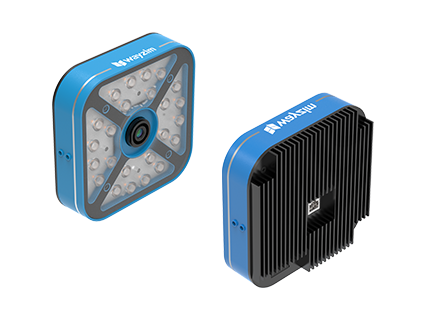
The scanning component is responsible for reading barcodes, QR codes and shipping labels at speed — often on parcels that are irregularly shaped or poorly labelled. High-speed logistics operations need scanners with high frame-rate acquisition and multi-angle reading capability to maintain accuracy at pace.
SmartlogitecX’s Fast Scanner integrates light sources and camera hardware with an embedded high-performance processor. It handles image acquisition, data processing and result output in a single device, reducing the need for backend supporting equipment. For Express Parcel Sorting Solution operations in Australia, where label quality varies across carriers, this kind of all-in-one scanning capability reduces read-failure rates and keeps parcels moving.
In-Motion Weighing and Dimension Capture Technology
Accurate in-motion weighing relies on dynamic load cells that can register stable mass readings while parcels are still travelling on a conveyor. The speed of the belt, the weight range of items, and the vibration isolation of the weighing section all affect accuracy.
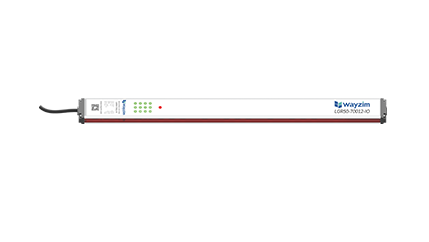
For dimension capture, SmartlogitecX’s Reflective Measuring Light Curtain uses optical focusing lenses, filters and emitters to detect parcel presence and position with precision. Combined with an inline Weighing & Labelling Conveyor — which handles weight detection, dimension detection and automated label application — the system captures all necessary data in a single pass without slowing the line.
Data Aggregation and Host System Integration
Raw data from scanners, scales and dimensioners is only useful if it reaches the right system at the right time. A well-configured DWS system aggregates data from all capture points and transmits it to the host computer — typically a WMS or TMS — in real time. This is what enables automated sort decisions, accurate freight billing and parcel-level tracking. The speed of this data handoff is as important as the speed of the physical capture. Latency between measurement and sort decision creates backlogs, even when the mechanical components are fast enough.
Matching DWS Capacity to Your Sortation and Fulfilment Workflow
Aligning DWS Output with Automated Parcel Sorting Systems
A DWS system does not operate in isolation. It feeds data to the sortation system that physically routes each parcel to its destination chute, lane or pallet. If your DWS captures data faster than the sorter can act on it, parcels queue between the two systems. If the sorter is faster than the DWS, it sits idle waiting for input.
The practical implication is that DWS throughput must be matched to sorter throughput. SmartlogitecX’s Cross Belt Sorter, for example, is designed for high-speed, high-accuracy sortation across a wide range of parcel sizes and weights. When paired with a DWS system of equivalent capacity, the result is a continuous-flow parcel handling line with no data-capture bottleneck. Getting this alignment right at the specification stage is far cheaper than retrofitting capacity later.
Integration Points: From Data Capture to Sort Decision
Between DWS capture and sort execution sit several integration points that affect overall throughput. The host system must receive parcel data, apply routing logic (based on destination, service level, weight class or carrier), and issue a sort command — all within the transit time between the DWS station and the sort point. Any delay in that chain creates a throughput constraint that no amount of mechanical speed can overcome.
This is where system design matters as much as component quality. The DWS, the host system and the sorter need to be designed as a single workflow, not assembled from disconnected parts. SmartlogitecX’s Express Parcel Sorting System Capabilities are engineered with this end-to-end integration in mind, ensuring data flows from capture to sort decision without friction.
Avoiding Throughput Bottlenecks Between DWS and Downstream Equipment
Bottlenecks between DWS and sortation typically occur at three points: parcel singulation (getting items into single file before scanning), data transmission (latency between capture and sort command), and physical accumulation (parcels backing up when the sorter can’t keep pace).
Addressing singulation is often the most overlooked step. SmartlogitecX’s 3D Bulk Flow Singulator separates bulk-fed parcels into single-file flow before they reach the DWS station, preventing overlapping items from causing scan failures or dimension errors. Without effective singulation upstream, even the fastest DWS system will underperform because it’s receiving items it can’t accurately measure.
Scalability, Modularity and Future-Proofing Your DWS Investment
Modular DWS Design for Staged Deployment
Not every warehouse needs full-scale DWS capacity on day one. A modular design allows you to deploy a base configuration — say, a single DWS lane processing 3,000 parcels per hour — and add lanes or upgrade components as volumes grow. This staged approach reduces upfront capital expenditure and lets you prove ROI before committing to full-scale deployment.
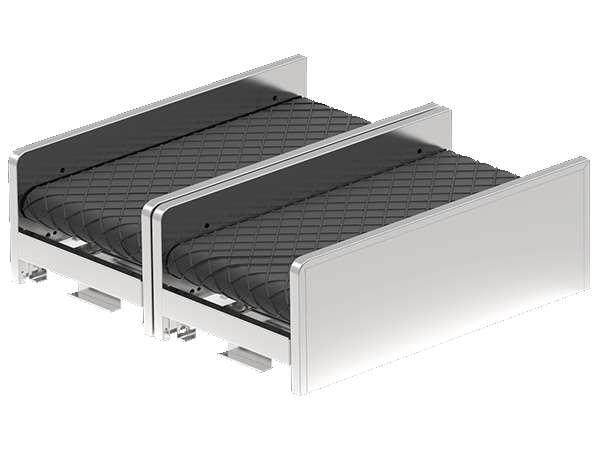
SmartlogitecX’s DWS system uses a modular architecture specifically designed for this purpose. Components can be added or swapped without tearing down the existing installation. Additional cameras, upgraded processors, or expanded conveyor sections slot into the existing framework with minimal downtime.
Scaling Throughput Without Full System Replacement
Scaling shouldn’t mean starting over. The most cost-effective DWS systems are those that allow throughput increases through incremental upgrades — faster scanners, higher-capacity load cells, or additional measurement stations — rather than full system replacement. When evaluating suppliers, ask about upgrade paths. A vendor who can only offer you a bigger box when you outgrow the current one isn’t offering a scalable solution.
Evaluating Total Cost of Ownership for Australian Operations
Purchase price is only the beginning. Total cost of ownership for a DWS system includes installation and commissioning, integration with existing WMS and conveyor infrastructure, ongoing calibration and maintenance, training for warehouse staff, and spare parts availability within Australia.
For Australian operations, local support matters. Equipment sourced from overseas suppliers without Australian service partners can result in extended downtime when something goes wrong. Factor in response times, parts logistics and the availability of local technical expertise when comparing DWS suppliers. Browse the full Warehouse Automation Products Catalogue to compare available configurations.
Frequently Asked Questions
1. What does DWS stand for in warehouse logistics?
DWS stands for Dynamic Dimensioning, Weighing and Scanning. It refers to an integrated system that captures parcel dimensions, weight and Barcode Reader for Logistics data in a single pass while items move along a conveyor.
2. How many parcels per hour can a DWS system process?
Throughput varies by configuration. Entry-level dynamic systems typically handle 1,500–3,000 parcels per hour, while high-performance setups can exceed 6,000–8,000 parcels per hour depending on parcel size mix and system design.
3. What is the difference between static and dynamic dimensioning?
Static dimensioning requires an operator to place each item on a measurement station. Dynamic dimensioning captures data while parcels travel along a conveyor, enabling much higher throughput without manual handling.
4. How does a DWS system integrate with existing warehouse management software?
DWS systems transmit captured data (dimensions, weight, barcode) to the host WMS or TMS via standard data protocols in real time, enabling automated sort decisions and freight billing.
5. What are the main components of a DWS system?
A typical DWS system includes barcode scanners, dimension-capture sensors (cameras or light curtains), dynamic weighing scales, a conveyor buffer section, and a host computer for data aggregation.
6. How much does a DWS system cost for an Australian warehouse?
Cost depends on throughput requirements, component specifications and integration complexity. Entry-level configurations start from tens of thousands of dollars, while high-throughput, fully integrated systems represent a significantly larger investment. Request a Quote for accurate pricing.
7. Can a DWS system be retrofitted onto an existing conveyor line?
Yes, provided the existing conveyor meets the mechanical and speed requirements. Modular DWS systems are designed to integrate with standard conveyor infrastructure, though some modifications may be needed for optimal performance.
8. How does in-motion weighing differ from static bench-top scales?
In-motion weighing captures mass while parcels travel along a conveyor, using dynamic load cells and vibration isolation. Static scales require parcels to be placed and settled, which limits throughput to manual handling speeds.
9. What accuracy levels should I expect from a freight dimensioning system?
Certified DWS systems typically achieve dimensional accuracy within ±5 mm and weight accuracy within ±0.05 kg, though specifications vary by manufacturer and operating speed.
10. How long does it take to install and commission a DWS system?
Installation timelines vary from a few weeks for standalone units to several months for fully integrated sortation lines. Commissioning includes mechanical installation, software integration, calibration and operator training.
Selecting a DWS System That Grows With Your Throughput
Choosing the right DWS system comes down to one discipline: knowing your numbers. Calculate your peak throughput, project your growth, and specify a system that meets both with headroom to spare. Then make sure every component — from the scanner to the singulator to the sorter — is designed to work as a single, coordinated workflow.
SmartlogitecX provides end-to-end DWS and Fast Scanners Project Category solutions for Australian warehouses, from initial throughput assessment through to commissioning and ongoing support. Explore our Intelligent Vision Project Category for advanced scanning technologies. If you’re evaluating a dimensioning weighing scanning system for your operation, request a consultation to discuss your specific throughput requirements and the configuration that fits.