How manufacturers and distributors are turning wasted warehouse height into working capacity, and how to choose the system that fits your goods.
SmartLogitecX Editorial Team • Reviewed for Australian operations • August 2026
Automated vertical storage systems hold inventory upward, on shifting trays or in stacker crane racking, and bring each item to the operator on demand. For Australian manufacturers and distributors squeezed by rising industrial rents and a tight labour market, that shift from horizontal shelving to automated height can reclaim most of a warehouse floor and cut picking time sharply.
This guide explains how the technology works, the measurable benefits it delivers in industrial settings, and how to match the right system to your materials. It draws on the ICAM range supplied and supported across Australia by SmartLogitecX, from compact vertical lift modules to stacker crane systems built for long steel.
| Quick take
• Building storage upward can recover up to 90% of the floor area that static shelving consumes. • Goods to person picking removes walking, lifts throughput and cuts mispicks. • The right system depends on your materials: small parts, long steel, sheet metal or low ceilings. • Match the machine to the job, then check local install and support before you buy. |
» MORE: Compare the full ICAM vertical storage range
What is automated vertical storage and how does it work?
Automated vertical storage is a class of automated storage system that holds goods in stacked trays or racking and uses a powered handling device to retrieve them, delivering the required load to an operator at a fixed station.
The defining principle is goods to person picking. Instead of a worker walking aisles to find stock, the machine brings the stock to the worker. A vertical automated storage system typically runs on three axes: vertical travel up the columns, horizontal travel across them, and a retrieval mechanism that draws the tray in and out. The operator stays put while the software queues the next job.
At the picking station, light curtains and an automatic shutter or closing panel protect the operator while trays are in motion, and emergency stops sit on the front of every machine. On ICAM systems, light guided picking, branded IRIDE, projects coloured beams straight to the correct compartment, which shortens training and cuts errors on high mix inventory.
The three main system types
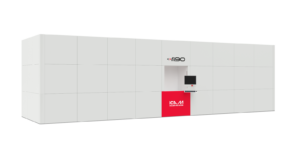
Most industrial vertical storage systems fall into three families:
- Vertical lift modules. Two columns of trays with a central lift, best for small parts, tools and mixed inventory.
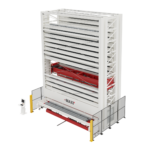
- Tower and drawer systems. Larger drawers on lifts, sized for panels, sheet metal and bulky items.
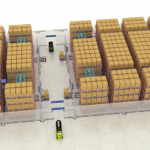
- Stacker crane systems. A crane running an aisle between tall racking, built for high volumes of long goods.
Where the space saving comes from
Conventional shelving wastes the air above head height. By building upward, often to 12 or 15 metres, and removing aisles, an automated vertical storage system can recover up to 90% of the floor area the same stock would occupy on static racking. That reclaimed space becomes production area, not dead storage.
The gain is structural, not incremental. A single SILO² column can carry up to 70 tonnes, and a MAXI L structure up to 80 tonnes, so a compact footprint holds what once needed a room of racking. Thinking in cubic metres rather than square metres is the mental shift that unlocks the saving.
» MORE: How goods to person picking reduces walking time
Key benefits of industrial vertical storage systems
The case for automation rests on four measurable outcomes: floor space, speed, safety and accuracy.
Recover expensive floor space
Floor space is one of the largest fixed costs in any Australian industrial operation. Systems such as the SILO² vertical lift module and the MAXI T tower reclaim up to 90% of the footprint that shelving consumes, because storage density moves from square metres to cubic metres. In a capital city industrial precinct, where warehouse rents have climbed steeply, that recovered area often removes the need to lease a second site.
Pick faster and reduce errors
Goods to person picking removes the single biggest time drain in manual warehouses, which is walking. Operators stay at the station while trays arrive in sequence, and light guided picking directs the hand to the correct compartment. Throughput rises, new staff reach full speed sooner, and mispicks fall because the system, not memory, decides what comes next.
Improve workplace safety
Body stressing, which includes hazardous manual tasks such as heavy lifting and awkward reaching, is consistently one of the largest single causes of serious workers compensation claims in Australia, according to Safe Work Australia. Automated vertical storage brings loads to an ergonomic working height and keeps operators clear of moving machinery behind light curtains and safety barriers. That directly supports an employer’s duties under the model Work Health and Safety laws.
Keep picking without pauses
Continuity is a benefit in its own right. Each ICAM system can run several picking and refilling stations side by side, so while an operator works one tray, the lift is already fetching the next at the adjacent station. That overlap trims or removes waiting time and keeps a busy dispatch bench or production line fed through the shift.
Gain full inventory traceability
Every movement is logged. Automated storage systems in warehouses record what was stored, retrieved, by whom and when, giving traceability by item code, batch and order. For regulated sectors, and for any business chasing stock accuracy, that audit trail is as valuable as the space saving.
Accuracy compounds over time. Because every pick and refill is confirmed against a location, rolling stock counts can replace the disruptive annual stocktake, and discrepancies surface the day they happen rather than at year end.
» MORE: Building the safety case for warehouse automation
Matching the right system to your materials
There is no single best vertical storage system. The right choice depends on what you store, how heavy it is and how fast it moves. Four questions settle most decisions:
- What are you storing, and how long is a single item?
- How heavy is one load unit or tray?
- How many picks per hour do you need at peak?
- How much clear height do you actually have?
Answer those and the shortlist narrows quickly. Here is how the ICAM range maps to common industrial needs.
Small parts and mixed inventory: SILO²
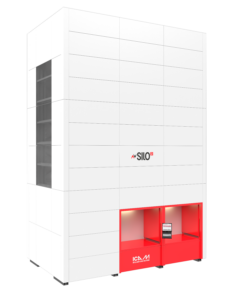
SILO² is a multi column vertical lift module for intensive storage of small to medium items, including dense goods such as fasteners, electronic components and pharmaceuticals. It runs from 2 to 7 columns, reaches up to 15 metres, and carries trays up to 400 kg. Two versions tune it to your priority: SILO² FAST lifts hourly throughput by more than 30%, while SILO² ECO cuts energy use by around 20%. For a parts store or maintenance crib, this is the workhorse.
Long, heavy and bulky materials: MAXI L and MAXI STC
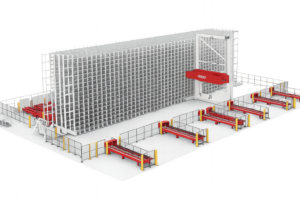
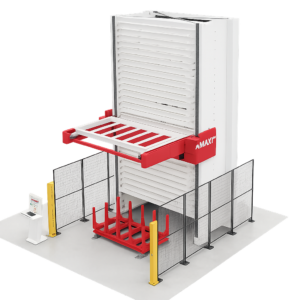
For bars, tubes, profiles and extrusions, storage moves to dedicated long goods systems. MAXI L is a vertical storage system for long, heavy and bulky materials up to 7,100 mm, ideal for aluminium and steel profiles, pipes, moulds and tooling, and it expands vertically as the business grows. When volumes are high, MAXI STC, a stacker crane automated storage and retrieval system, manages 400 or more load units up to 7 metres in a fully automated cycle, combining retrieval and deposit in a single movement to lift throughput. Metal fabricators and window and door manufacturers are typical users.
Panels, sheet metal and low ceilings: MAXI T and RIGO
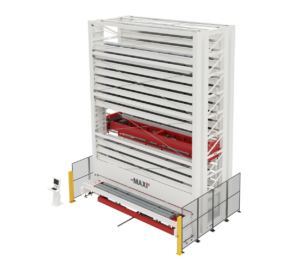
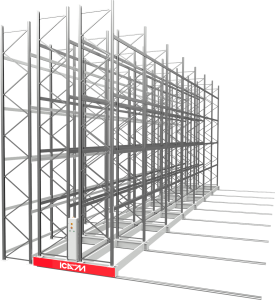
MAXI T is an automatic tower system engineered for panels, sheet metal and bulky materials, with drawers rated to 3,000 kg and up to 90% floor space reduction. It feeds cutting centres, presses and laser lines directly, turning storage into part of the production flow. Where ceilings are too low for a tower, RIGO Multicolumn Automated Warehouse Lift System takes a different route: a horizontal automatic lift system that delivers high density in basements, low rooms and complex layouts, and even outdoors.
A worked example makes the trade offs concrete. A medium sized metal fabricator running two laser cutters might store sheet and offcuts in a MAXI T tower that feeds the machines, keep aluminium and steel profiles in a MAXI L, and hold consumables, inserts and hardware in a SILO² at the assembly bench. Three systems, one control layer, and the floor that once held racking is freed for another work cell.
SmartLogitecX supplies and configures this full ICAM range in Australia, so the specification is matched to the material rather than forced to fit a single machine.
» MORE: Long materials storage explained
What Australian operations should weigh before investing
Automation is a capital decision, and the Australian context changes the maths.
Floor space economics
Industrial land and warehouse rents in Sydney, Melbourne, Brisbane and Perth sit among the tightest in the region. When storage density per square metre rises, the payback often comes not from labour alone but from avoiding a lease expansion or a greenfield build. Model the recovered area against your current rent per square metre before anything else.
Work health and safety duties
Under the model WHS Regulations, businesses must manage the risks of hazardous manual tasks so far as is reasonably practicable. Bringing loads to the operator at height, rather than sending workers up ladders or into heavy lifting, is a direct control. Racking installations should also meet the Australian steel storage racking standard, AS 4084, which SmartLogitecX factors into every design.
Energy and running costs
Running cost matters across a machine’s life, not just at purchase. The SILO² ECO version cuts overall energy use by around 20% against the standard build, which trims operating cost and supports emissions reporting. Where throughput is the priority, SILO² FAST trades some of that saving for more than 30% higher hourly performance. Choosing the version at the bidding stage keeps the machine right sized for the workload.
Installation, service and support
An imported machine is only as good as the support behind it. Freight distances across Australia make local commissioning, spare parts and service response a genuine differentiator. Confirm who installs, who maintains, and how fast a technician can reach your site before you sign.
» MORE: Warehouse automation checklist for Australian sites
Software, integration and return on investment
Hardware stores the goods. Software makes it a warehouse.
One control layer with ICON
Every ICAM system runs on ICON, the manufacturer’s web based warehouse software. ICON handles real time monitoring, automated retrieval missions, user permissions and traceability by item code, batch and order. It also integrates with leading WMS and ERP platforms, so the storage system reports into the tools your team already uses rather than becoming an island. ICON can even map floor stock held outside the machine, giving one view of total inventory.
The software also supports ABC classification, so fast moving lines sit in the quickest positions while slow or obsolete stock becomes easy to spot and clear. Over time that logic keeps cycle times low and stops dead inventory quietly eating capacity.
Scale without ripping it out
Good industrial storage solutions grow with the business. MAXI L and SILO² expand through modular extensions, and extra picking stations can be added later. That protects the initial investment and lets capacity follow demand instead of forcing a large upfront overbuild.
Framing the return
Build the business case in dollars across three lines:
- Recovered floor area valued at your rent per square metre, or the avoided cost of a second site.
- Fewer picking hours, faster onboarding and lower error rework.
- Reduced manual handling injuries and the insurance and downtime costs that follow them.
For many medium sized operations, the combined saving brings payback within a few years, after which the space and labour gains compound. SmartLogitecX can model these figures against your own numbers during specification.
Factor lead time into the plan as well. A configured industrial system is built to order, so specifying early lets installation land when the space, the budget and the production schedule are all ready for it.
» MORE: Estimating payback on automated storage
The bottom line
Automated vertical storage earns its place by turning wasted height into working capacity. It recovers floor space, speeds up and makes picking safer, and gives full traceability, provided the system is matched to the material and backed by local support. Start by measuring what your current storage costs in floor area, labour and injury risk, then map those figures against the system that fits your goods. To scope the right ICAM vertical storage system for your site, and to model the payback on your own numbers, talk to the team at SmartLogitecX.
Frequently asked questions
How much floor space can an automated vertical storage system recover?
Up to about 90% of the area the same stock occupies on static shelving, because storage moves upward into unused height and aisles are removed. The exact figure depends on ceiling height and product mix.
What is the difference between a vertical lift module and a tower system?
A vertical lift module such as SILO² uses trays on two columns with a central lift and suits small to medium parts. A tower system such as MAXI T uses larger, heavier drawers and suits panels, sheet metal and bulky loads.
Which system is best for storing long materials like bars and profiles?
MAXI L handles long, heavy and bulky materials up to 7,100 mm. For high volumes of long goods, the MAXI STC stacker crane manages 400 or more load units up to 7 metres in a fully automated cycle.
Can automated vertical storage integrate with our existing WMS or ERP?
Yes. The ICON software that drives the ICAM range is web based and built to integrate with leading WMS and ERP systems, reporting stock and movements into the platforms your team already uses.
How high can these systems be, and do they work with low ceilings?
SILO² reaches up to 15 metres and MAXI L up to 15,000 mm, while MAXI T towers rise to around 12 metres. Where ceilings are low, the horizontal RIGO system delivers density in basements and low rooms instead.
Is automated vertical storage worth it for a medium sized operation?
Often yes. Payback usually comes from recovered floor space, lower picking hours and reduced manual handling risk combined, rather than any single line. Modelling those three against your own costs is the fastest way to judge fit.
How does goods to person picking improve safety?
It brings loads to the operator at an ergonomic height and keeps staff away from moving parts behind light curtains and barriers, reducing the hazardous manual tasks that drive many workers compensation claims.
What standards apply to automated storage racking in Australia?
Racking should meet the Australian steel storage racking standard, AS 4084, and installations must satisfy work health and safety duties under the model WHS laws overseen by Safe Work Australia and the state regulators.
Does SmartLogitecX install and support the ICAM range in Australia?
Yes. SmartLogitecX specifies, installs and services the ICAM vertical storage range across Australia, including SILO², MAXI L, MAXI T, MAXI STC and RIGO, with local commissioning and support.
About SmartLogitecX: an Australian warehouse automation specialist supplying, installing and supporting the ICAM automated storage range for manufacturing, fabrication, distribution and industrial operations nationwide.